A Talk With USA Today Bestseller Anna J. Stewart!
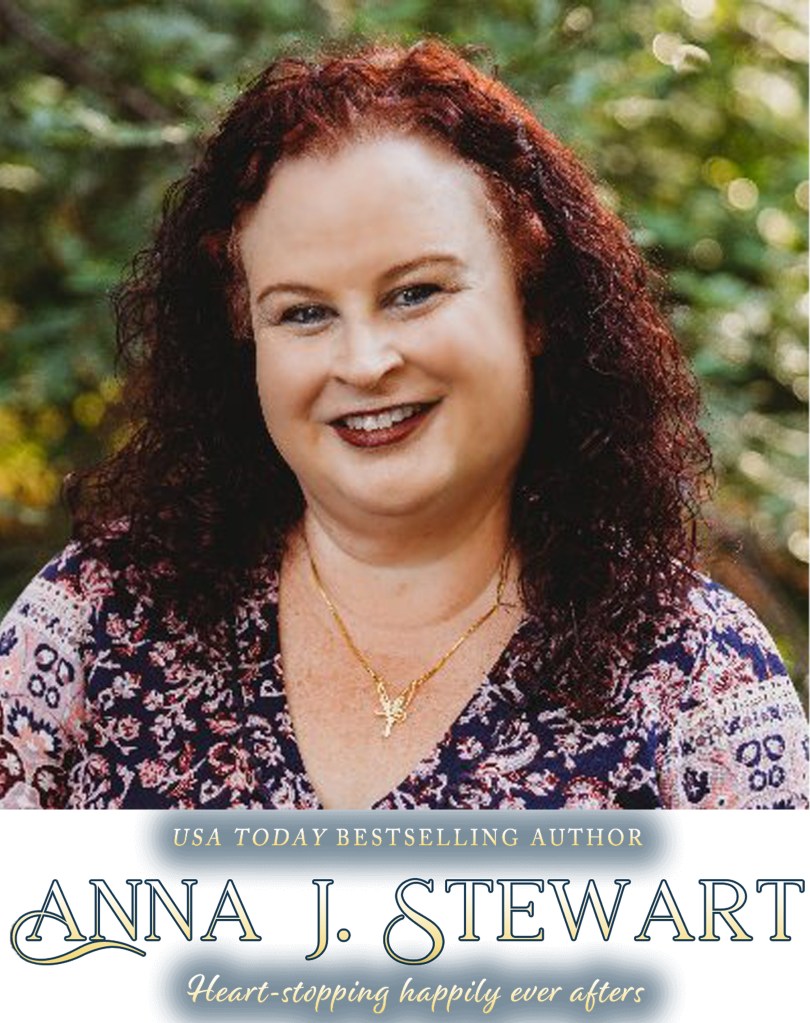
It is always a pleasure to meet authors and introduce them to my readers. I appreciate you taking time out of your busy schedule to speak with me today.
- I make it a habit to kick off my interviews with the same telling question. Hence, how would you describe yourself?
- A grown up geek girl with far too many stories in her head and a member of far too many pop culture fandoms.
- I am a reader, first and foremost, as I have discovered most authors are. The literature I grew up reading shaped me as a reader and writer. This topic has value for so many reasons, and I’d like to talk about it, if we may.
- Some authors are avid readers (like me) and others have told me the only books they could enjoy were the ones they wrote themselves. Which do you consider yourself, and why?
- I used to read a lot more than I do currently. I have to work on carving out more time to do that. I absolutely started out as a voracious reader. An early reader, too. I always had a book in my hand growing up. I dived into Stephen King books (Carrie was my first) before I was ten years old, and from there, reading was all I wanted to do. I don’t know if you can be an effective writer or storyteller without a love of reading. Maybe you can? But I know my love of reading is really what turned me into a writer.
- What brought you into the world of books?
- My mother. Books were the one thing she never said no to. There was a great public library near my house when I was growing up and an even better used bookstore, which, after I discovered romance novels, became a daily stop on my way home from school. But in essence, it was my mother. She used to record my favorite stories on cassette tape for me to listen to whenever I wanted. She was way ahead of the audio book curve.
- My favorite books as a child are still some of my favorite books now. I have them all, too. I read everything, but like I said above, I started with adult books at a very early age. There weren’t any YA books back in the 70’s and 80’s that there are now, so Stephen King, Dean Koontz, Nora Roberts, John Sandford, those were my gateway authors into reading all genres. But I think they all share the same dynamic talent with character. Without great characters, who cares about the story? It’s a lesson I keep in mind whenever I’m writing.
- What brought you into the world of books?
- Sometimes. Since I don’t read as much as I’d like to (or probably should), I just go with whatever I feel like reading. I love thrillers and crime stories. I also like books written on historic crimes (Jack the Ripper is catnip to me for some reason). I also like books that examine psychological and criminal behavior. I read pretty much everything and anything and gained an appreciation for science fiction in college. I love watching science fiction, but never really read much of it growing up.
- Do you feel this helps inspire your work, and if so, how?
- I find reading typically helps me get through blocks or when I can’t see where the story is going. It activates a different part of my brain and kind of opens things up for me. So reading definitely acts as inspiration at times.
- Do you feel this helps inspire your work, and if so, how?
- I don’t think there’s a renaissance. Romance has always been popular and has a rabidly devoted readership. I think it’s been expanding into new subgenres in a way that attracts more readers. And hopefully those readers will discover what’s so special about it.
- I used to read a lot more than I do currently. I have to work on carving out more time to do that. I absolutely started out as a voracious reader. An early reader, too. I always had a book in my hand growing up. I dived into Stephen King books (Carrie was my first) before I was ten years old, and from there, reading was all I wanted to do. I don’t know if you can be an effective writer or storyteller without a love of reading. Maybe you can? But I know my love of reading is really what turned me into a writer.
- Some authors are avid readers (like me) and others have told me the only books they could enjoy were the ones they wrote themselves. Which do you consider yourself, and why?
- Romance is my genre. It’s what I love to read, it’s what I will always write. It’s about two characters (in my case a hero and heroine, but there are fabulous LGBTQ+ books out there) who find the person they’re supposed to go through life with. It’s what we as humans strive for, so I don’t understand why people crap all over romance as being something less than. It’s about emotions and growth and becoming better versions of ourselves as we fall in love.
- Shakespeare wrote romance (Taming of the Shrew, NOT Romeo and Juliet). JRR Tolkien put the romance between Arwen and Aragorn front and center. So many of our classic books feature romantic relationships. So I always take Umbridge when people consider romance to be anything less than what it is—a guaranteed happily ever after. There’s absolutely nothing wrong with that.
- What drew you to writing Romance and its sub-genres?
- As soon as I started reading romance I knew that’s what I wanted to do. It was an almost visceral reaction. I closed that first book and thought “I need to know how to do that.” It took me a lot of years and a lot of stories and a lot of learning, but I got there. And it’s absolutely the best job in the world. For me at least.
- What drew you to writing Romance and its sub-genres?
- Shakespeare wrote romance (Taming of the Shrew, NOT Romeo and Juliet). JRR Tolkien put the romance between Arwen and Aragorn front and center. So many of our classic books feature romantic relationships. So I always take Umbridge when people consider romance to be anything less than what it is—a guaranteed happily ever after. There’s absolutely nothing wrong with that.
- Since Romance storytelling is formulated, how do you keep your content fresh and surprising? Where do you find your inspiration for new plots?
- Okay, let’s clear this up, LOL. There is no formula to writing a romance. If there was, no one would struggle to get published and it wouldn’t have taken me twenty years of learning and rewriting to get a contract. Yes, there are elements that are common to a romance novel, but the story is organic to the storyteller and the characters. The only thing that must be in a romance is a happily ever after or a happily for now. That’s literally the only rule. Everything else is negotiable. I would also argue that mutual respect is an essential element. But that could be a judgement call on my end. All that said, I’m just always looking for a new way to tell a story. I can use the same trope multiple times, but flipping something upside down and into something unexpected is the best way I can keep things fresh.
- Since Romance storytelling is formulated, how do you keep your content fresh and surprising? Where do you find your inspiration for new plots?
- My ideas come from everywhere. A lot of times it’s while I’m watching a TV show and something a character does or says triggers an idea. I’ve had a story idea come to me while touring an art museum, and also overhearing a conversation at a grocery store. The world is my idea file, LOL.
- How did you discover your flare for writing?
- When I was in high school, a group of friends and I started writing mini romances (probably what we’d call fan fiction now). I became a bit obsessive about it. Everyone else outgrew the fad, but I just kept going. The more I write, the better I get, so that flare just comes with practice I think.
- Our writing is so personal. Sometimes, writers never share their work because it leaves them so vulnerable. What encouraged you to share yours?
- You can’t get published without sharing, without feedback. A support system is vital and I have a great one. Finding other writers who want your success as much as they want their own is vital. Positive feedback helps you to learn what works and what doesn’t. Sure it’s a moment of vulnerability, but it’s just part of the process if you want to make this a career.
- What motivated you to publish your work?
- Traditional publishing was always my goal. When I started getting serious about publishing, there was no indie publishing. I’m wired for traditional, not indie (that takes way too much work in areas I’m not good at). I admire those authors who take on indie publishing, but I like working with my editor at a house that wants my stories. I get to write what I want to write (within guidelines sometimes), then see what comes of it once it goes through the editing and art process. I like the stability writing for Harlequin gives me, and they also give me some flexibility when life gets in the way. So for me, getting published in this way is a pretty predictable and safe way to have a productive writing career.
- Our writing is so personal. Sometimes, writers never share their work because it leaves them so vulnerable. What encouraged you to share yours?
- When I was in high school, a group of friends and I started writing mini romances (probably what we’d call fan fiction now). I became a bit obsessive about it. Everyone else outgrew the fad, but I just kept going. The more I write, the better I get, so that flare just comes with practice I think.
- You publish primarily under Harlequin‘s Heartwarming (sweet romance) and Romantic Suspense (spicy) lines. In addition, you have titles published by Arc Manor’s Caezik Romance. This fascinates me since I understand the difference between these publishers. I’d like to discuss this topic, please.
- First, I think it is important to understand your journey into publication, since being a published author doesn’t make you a writer. What encouraged you to publish your manuscripts?
- The promise of getting published was a big factor in encouraging me to work toward traditional publication. Having supportive writer friends was also huge. Being surrounded by family and friends who understood my dream and refused to let me quit (and I almost quit a few times) also worked in my favor.
- I’m the full traditionally published author. I have had 2 agents in the past, but neither worked out for various reasons. I’ve actually been on the hunt for a new one the past few years but haven’t gotten very far. Again, my dream was to work with a traditional publisher. Working with a small press like Arc Manor/Caezik Romance was a gift that kind of presented itself because of a fortuitous meeting. I’ll take any opportunity that comes my way, LOL.
- What influenced your decision to take this pathway to publication?
- The promise of seeing my books on the shelves and finding voracious readers who looked forward to my books like I look forward to my favorite author releases.
- I wouldn’t actually. If I’d done anything differently, I wouldn’t be where I am now. Who knows what might have happened? I might have actually quit and then where would I be? I’d be very unhappy and lamenting unfulfilled dreams. So nope. I wouldn’t change anything.
- It depends what you want as a writing career. It’s easy enough to self-publish a book and become a published author, but there’s a lot of other work that goes along with that. So in that way, it’s easier. There are lot of options out there for writers that weren’t around when I started, so more options always make things a little bit easier. But however you publish, it’s a lot of hard work.
- What influenced your decision to take this pathway to publication?
- First, I think it is important to understand your journey into publication, since being a published author doesn’t make you a writer. What encouraged you to publish your manuscripts?
- I think it’s important that writers learn everything they can about all the different avenues so they can make the right decision for themselves. Also, there’s no wrong way to publish. What works for you, works for you. That is all that matters.
- You’re right in that there are pros and cons to each. A lot of it is the business model and what a big house can do vs a small press. That said, small or large house, the author is going to be doing the majority of their publicity for their book. Until you get to the top tier of publishing, that’s just the way it is.
- I like the structure of what Harlequin requires of me. I know what they expect when I’m writing for a certain line and what I can or can’t write within those confines.
- What I love about Arc Manor is my editor and publisher both say, “write what you want. Tell the story how you want to tell it.” So the restrictions are off, which is very freeing from a creative perspective.
- Writing for both gives me the best of both worlds. I can write a Harlequin pretty quickly (they’re only about 300 pages), while the Arc Manor books are longer and more intricate. I get to swing back and forth and keep myself challenged and fulfilled creatively.
- How does the publishing process differ from Harlequin (traditional publisher) to Arc Manor (small press)? For example, do you lose control in cover design or find more censorship in content? Are there any differences in how you develop and process a manuscript?
- I don’t get much control over the end product with Harlequin and I’m fine with that. They know what they’re doing. They design the cover but they also create the back cover copy and find just the right title for the story. I love that I don’t have to worry about all that.
- With Arc Manor, they were gracious enough to let me hire my own cover designer, so I get to help create them. Discovering I’d have to write my own back cover copy was a bit of a shock, but it’s added to my abilities as a writer. There’s really no difference in how I develop the manuscript. It just depends on the guidelines I’m working with—or not.
- How do you handle editing? Do your publishers offer this service, or do you commission a professional editor independently?
- Thankfully, I have amazing editors at both houses. It’s part of the reason I like being traditionally published. We work really well together and after a few books, we get to know how the other thinks. I typically get one round (or two if the story itself needs tweaking) of edits, then a final round of copy edit checks.
- What about cover designs?
- With Harlequin, I fill out what’s called an Art Fact Sheet. This is a questionnaire where I fill in the details of the book: the character description, a synopsis of the story, scene ideas that I think might make a good cover “shot.”
- With Arc Manor, like I said above, I get to work with a fabulous independent cover designer. Her work on the Red Lily books has been amazing and for book 3, she knocked it out of the park on the first try, just based on a short email I sent that described the story (I only have a bare bones idea of what happens since I don’t plot my books—I’m a pantser). My publisher of course has the final say and approval, but so far we’ve had great reactions to those covers. Oh, and the publisher pays for that cover, not me.
- How did you connect with Harlequin?
- Through my local romance writing organization. I made amazing friends and eventually one of those contacts got my foot in the door with a novella she suggested I write. That was my foot in the door and from there I’ve gotten my subsequent contracts. As of the posting of this article, I’ve published more than 30 romances with them.
- What do you feel is the best aspect of working with this publisher (pros)?
- I like seeing how the production process works (from a distance of course). But the best part for me is the predictable schedule I can set up, so I know with my deadlines, when I’ll be paid and that makes making a living far easier than the unpredictability of needing to monitor sales.
- I think the worst aspect is the possibility that I’ll start feeling repetitive and that I’m telling the same stories. There isn’t a lot I don’t like as a Harlequin author. They give me stability and the ability to work at home and set my own hours. Doesn’t get much better than that.
- How did you connect with Arc Manor?
- Again, through a friend who was doing some editing work for them. She told me they were looking for some romance novellas and I was able to write some for them. A few years ago they decided to launch their romance imprint, Caezik Romance and I was lucky that they came to me to ask if I’d write a series for them. That’s how the Circle of the Red Lily series was born.
- What do you feel is the best aspect of working with this publisher (pros)?
- The ability and freedom to write unrestrained and unrestricted. I get to swear in my books (believe me, that’s a big deal!) and I don’t have to filter myself through a Harlequin lens.
- What do you feel is the worst aspect (cons)?
- Small presses don’t have the resources that larger houses do and they ask their authors to do things that my bigger publisher doesn’t. I loathe writing cover blurbs, but it’s a necessity with them.
- What do you feel is the best aspect of working with this publisher (pros)?
- What do you feel is the best aspect of working with this publisher (pros)?
- Through my local romance writing organization. I made amazing friends and eventually one of those contacts got my foot in the door with a novella she suggested I write. That was my foot in the door and from there I’ve gotten my subsequent contracts. As of the posting of this article, I’ve published more than 30 romances with them.
- If you had any advice for a novice writer looking to become a published author, what would it be?
- Keep writing. Seriously, the only way you’re going to get better is to keep writing. Write everything without restraint. Discover and embrace your voice. And read! Read everything you can get your hands on. Seeing how other authors are creating will only aid in your own abilities.
- As a cat lady, I would be remiss not to talk about felines.
- Please tell us about Rosie and Sherlock?
- Oh, my feline terrors. We adopted them about six years ago at an adoption drive. Rosie is a Tortie breed and all attitude. Sherlock is a black kitty with a tiny white poof on her chest. She’s a total sweetheart and pretty much my cat. Rosie has become my mother’s cat and prefers her when given the choice. Unless I’m feeding her.
- I am so grateful neither of them have any interest in my laptop or keyboard. Whew!! My previous cat, Snickers, she frequently would try to take over my writing space but Rosie and Sherlock couldn’t care less about my writing space.
- When you have “writer’s block,” do you simply move the cats, or how do you deal with it?
- I start brainstorming out long hand. No keyboard. It engages a different part of the brain. My other solution will sound a bit strange, but I take a shower and wash my hair. There’s something about engaging both hands and adding in the water that seems to unlock whatever’s stuck in my head.
- When you have “writer’s block,” do you simply move the cats, or how do you deal with it?
- I’m trying to get into the habit of not reading any of my reviews, good or bad. In the grand scheme of things, they don’t really matter. I’m appreciative of course! And I always love to hit that magical Amazon review number of 50, but I learned a long time ago that some people are going to love what I write, others will hate it. Either reaction is perfectly valid. I just write the story that needs telling. That said… what a great idea to give the cats some more things to bat about the house! Thanks!
- What does your typical day of writing look like, and how do your cats participate in it? Does Rosie get your coffee or tea while Sherlock brings the mice?
- Ideally, I’m up at 4:45 in the morning, feed the cats, take care of mom and get her settled, eat breakfast and hopefully get to the computer by 7:30, then write until noon. I aim for about 5K words a day (that’s about 20 pages), so if I don’t get it by noon, I’ll come back after lunch with mom and get to that goal. I like to have my evenings free, especially since I tend to go to bed pretty early. And the idea of those two getting my tea terrifies me!! Nope, when I’m writing, they’re usually sleeping on the back of our sofa or under my bed.
- Please tell us about Rosie and Sherlock?
- What can we expect to see from you over the coming year?
- I have quite a few releases. In April, the third romance in my Heartwarming Hawaiian Reunions series will be released. That one is called A SUPRRISE SECOND CHANCE. Then I have releases in May (THE HOLLISTER BROTHERS’ HOMECOMING from Arc Manor), September (HUNTING COLTON’S WITNESS, Harlequin Romantic Suspense), October (A COWGIRL ON HIS DOORSTEP, Book 3 in the Blackwell Belles series for Heartwarming), November (BURIED, Book 3 in the Circle of the Red Lily series), and then in December I’ll release A HAWAIIAN CHRISTMAS ROMANCE (Heartwarming). Whew! I think that’s more than I realized!
- What is your current WIP?
- I’m currently writing the December Heartwarming and then I’ll be writing the first in a new mini-series for Harlequin Romantic Suspense. The title is still under consideration. Once I’m done with that I can dive into BURIED (which is due in May).
Thanks again. You are a fascinating person I’d love to get to know better. I wish you success and good health!
Same to you! Thank you for this wonderful interview!
 J.M. NORTHUP