
There has been a lot of discussion lately about immigration, especially what is happening with the deportation of illegal aliens found in the the United States. The heated debate regarding deportations mainly surrounds “due process.” I thought I would discuss this as my first installment for my new blog series, #OpinionsAreLikeAssholes, since we all have opinions on this issue.
I want to begin by addressing what due process actually is and who it applies to because that is the crux of the argument. The 14th Amendment to the US Constitution is what defines this for us:
Fourteenth Amendment, Section 1:
“All persons born or naturalized in the United States, and subject to the jurisdiction thereof, are citizens of the United States and of the State wherein they reside. No State shall make or enforce any law which shall abridge the privileges or immunities of citizens of the United States; nor shall any State deprive any person of life, liberty, or property, without due process of law; nor deny to any person within its jurisdiction the equal protection of the laws.“
Now, the United States is a Constitutional Republic (which is different from a true Democracy). It was designed to give the Legislation branch the most power, which is why Article I of the Constitution discusses this section for the balance of power. This is because it’s an ELECTED collective of ALL the people of the country; a sampling of each state and district between House and Senate. They have the power to amend and ratify our Constitution in accordance with Article V as they are meant to directly represent THE PEOPLE. Next is the Executive branch, under Article II. This is because a president is ELECTED to uphold the WILL OF THE PEOPLE as mandated through the supported campaign promises. Finally, we have the weakest of the branches, which is the Judicial power as outlined by Article III. The biggest thing to note about this is that the Judicial is considered the weakest branch due to it NOT being directly elected by the people, but put in place through appointment by the other branches.
It is important to understand the power structure of the three branches because the Constitution gave Legislation the right of the Suspension Clause and Writ of Habeas Corpus under Article I, Section 9, Clause 2. However, national security and public safety was granted as an Executive power, directly under the Commander-in-Chief, or President. This includes border security. Moreso, it is the Executive branches’ role to ENFORCE the law under the interpretation and ADVISEMENT of the Judicial branch, even in matters of immigration.
What power does the president have to act on immigration issues?
As chief executive, the president not only has the duty to enforce laws, but also the authority to decide how to do so.
Every law enforcement agency, including the agencies that enforce immigration laws, has “prosecutorial discretion” — the power to decide whom to investigate, arrest, detain, charge, and prosecute. Agencies may develop discretionary policies specific to the laws they’re charged with enforcing, the population they serve, and the problems they face.
The U.S. Department of Homeland Security (DHS) may decide how to prioritize its resources in order to meet its stated enforcement goals.
Executive authority to take action is thus “fairly wide,” as former INS Commissioner Doris Meissner has said.1 The Supreme Court has emphasized the federal government’s “broad discretion,” which includes consideration of “immediate human concerns.”
https://www.nilc.org/wp-content/uploads/2015/11/president-legal-authority-2014-08-20.pdf
The thing to really know is that a citizen receives FULL Constitutional backing and rights as prescribed by Article IV, Section 2, Clause 1 of the Constitution. However, the original Constitution doesn’t really define what a “citizen” is. At the time the constitution was written, it was accepted that a citizen was a landowner and/or taxpayer, and when it came to voting, states generally prescribed that to mean “white men with property.” Truth is, the decided definition came with the 14th Amendment, but we must point out that its initial purpose was to ensure formerly enslaved people had equal rights following the Civil War. However, it has expanded to cover other forms of discrimination, including women’s rights, Native Americans, and immigrants.
Our discussion here is ILLEGAL aliens. Do they have the right to due process? Yes, they do, but it is NOT the same level of rights a “citizen of the United States” receives. This is not unique to America, so don’t get all wiggy. Every country had immigration laws to protect its sovereignty (which includes resources and security). The question is what “due process” means when it comes to your status as illegal, visa holder, green card holder, and naturalized/native citizen, and who in the the country has the right to defined “due process.”
Realistically, the definition of “due process” is what is really means. The Due Process Rights of Illegal Entrants to the United States does a great job in explaining that the court process isn’t what most think it is. It is not atrial and there is no jury. Mainly, it is handled in front of an immigration judge with jurisdiction on a more administrative level.
Who has the right to determine what “due process” is? Simply put, the Executive branch (a.k.a. The President and the AG of the US) has the most power as the protector of our sovereignty.
The Attorney General of the United States has significant authority and responsibilities related to immigration law. They are involved in enforcing immigration laws, issuing regulations, and providing legal advice on immigration matters. The Attorney General also oversees the Department of Justice’s Executive Office for Immigration Review (EOIR), which includes the Board of Immigration Appeals (BIA).
AI Overview
Before you get all upset – Yes, it is true that the Supreme Court within the Judicial branch has the ultimate authority to arbitrate what “due process” MEANS, but ultimately it is the Executive branch who is responsible for enforcing it. HOW they enforce it is also contingent upon national security.
In the U.S., the final arbiter of what “due process” means is the Supreme Court. The Supreme Court’s decisions on constitutional law, including the meaning of the Due Process Clause, are binding on all other courts and government entities. This means the Supreme Court has the ultimate authority to interpret and apply the Due Process Clause to various situations.
AI Overview
Let’s not forget how the balance of power works. The order is clear: the Supremacy Clause (Article VI, Clause 2) of the Constitution states that federal law trumps state law. Laws are made by the Legislative branch, based on the interpretation of constitutionality from the Judicial branch and their potential advisement, and then upheld by the Executive branch. However, when the safety of the nation is under threat in ANY way, it is at the discretion of the Executive branch (specifically, the President) to act in haste on behave of our national security.
I watched this podcast that was quite informative. I hope it beneficial to you, as well.
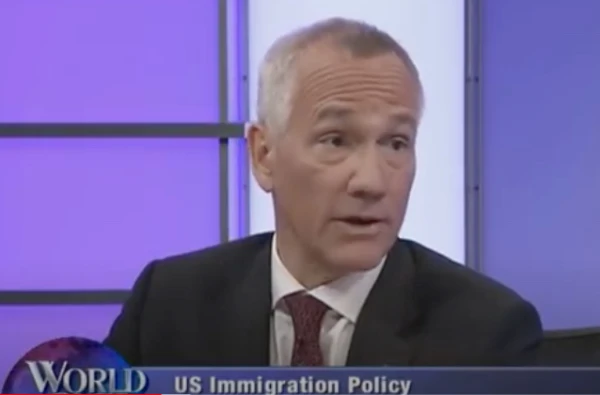
The “Due Process” Lie & “Maryland Man” Hoax w/ Andrew Arthur
Let me know your thoughts in the comments!

 J.M. NORTHUP